Nairobi National Park guide: history, map, gates and facts
Kenya's first national park, a wild savannah on the edge of a capital city.
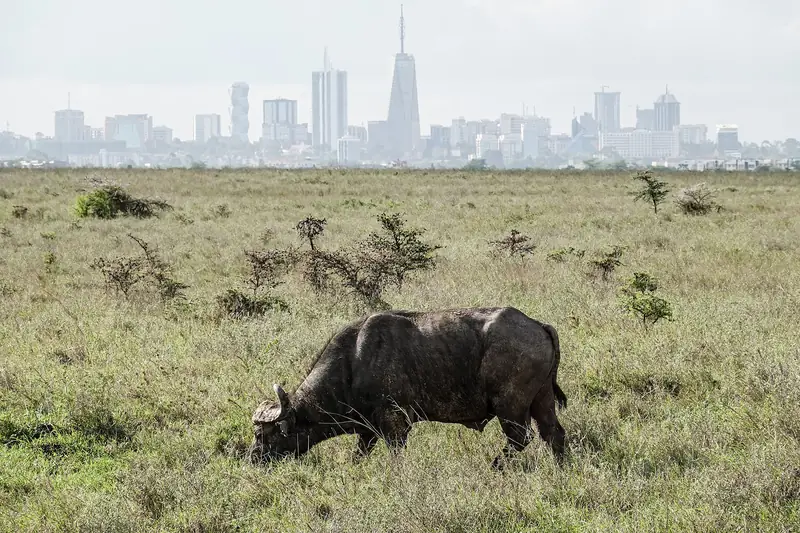
Nairobi National Park quick facts
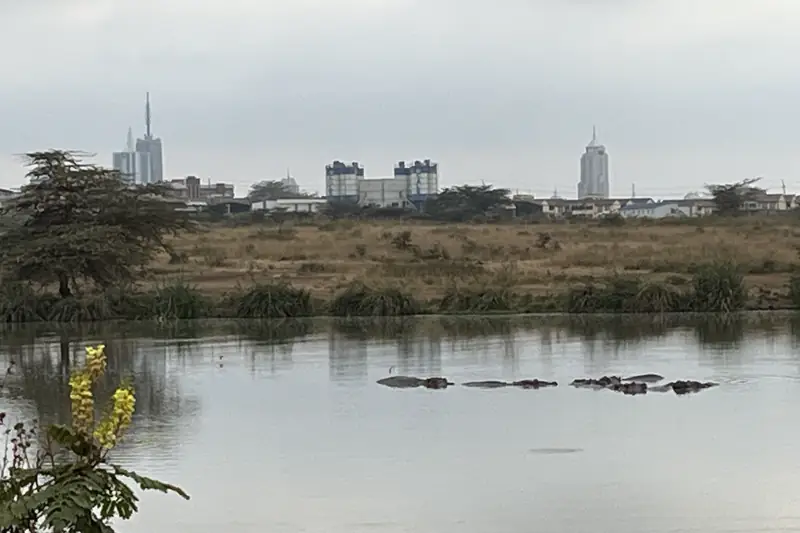
Nairobi National Park is a 117 square kilometre wildlife park on the southern edge of Kenya's capital. Founded in 1946, it was the first national park in Kenya. Lions, black rhinos, giraffes, buffalo and zebra roam open plains with city towers on the horizon, about 7 km from the city centre.
| Fact | Detail |
|---|---|
| Size | About 117 square kilometres (117.21 km²) |
| Founded | 1946, Kenya's first national park |
| Distance from the city centre | About 7 km south of central Nairobi. Main Gate is about 8 km from the CBD by road |
| Altitude | About 1,533 m to 1,760 m above sea level |
| Habitats | Open grass plains with scattered acacia, dry highland forest in the west, riverine forest along the Mbagathi River, rocky valleys and gorges, man-made dams |
| Fencing | Electric fence on the north, east and west sides, facing the city |
| Southern boundary | The Mbagathi River, left open so animals can move to the Kitengela dispersal area and the Athi-Kapiti plains |
| Rhino status | A rhino sanctuary and breeding stronghold, nicknamed "Kifaru Ark" (kifaru is Swahili for rhino) |
| Managed by | Kenya Wildlife Service (KWS), headquartered at Main Gate |
| Opening hours | 06:00 to 18:00 every day. No night game drives |
| Wild elephants | None. See orphaned elephants at the Sheldrick nursery inside the park |
The park protects less than a tenth of the wider Athi-Kapiti ecosystem. That is why the open south matters so much: in the rains the herds spread out onto Maasai rangeland, and in the dry months they come back to the permanent water inside the park. For what you can expect to see on a drive, read our animals guide, and for the rules of the road inside the gates, see the park rules.
History of Nairobi National Park
Nairobi National Park was gazetted in 1946 after a campaign led by the conservationist Mervyn Cowie. Before that, the land was part of the Southern Game Reserve, a commons on the edge of Nairobi used for grazing, dumping and even bombing practice.
The Southern Game Reserve years
In the early colonial period the plains south of Nairobi sat inside the Southern Game Reserve. The reserve protected little in practice. Settlers grazed cattle, the town dumped rubbish there, and the Royal Air Force used part of the area for bombing practice. Game was hunted, and herds were thinning as the town grew.
Mervyn Cowie's campaign
Mervyn Cowie was born in Nairobi and returned to Kenya in 1932 after studying abroad. Alarmed by how fast wildlife was disappearing from the plains he had known as a boy, he lobbied the colonial government to set land aside for a true national park. His campaign worked. In 1946 Nairobi National Park became the first national park in Kenya, and Cowie served as director of the national parks until 1966.
The plains had long been Maasai grazing land, and the southern rangeland beyond the river is still Maasai country today. Living alongside wildlife on that open land, with its benefits and its costs, remains the central question for the park's future.
From colonial park to KWS flagship
After independence the park passed to Kenyan management. Today it is run by the Kenya Wildlife Service, whose national headquarters stands at Main Gate on Lang'ata Road. The park has become a breeding ground for black rhinos that are moved to other Kenyan parks, a teaching park for school groups, and the setting for some of the most important moments in the global fight against the ivory trade.
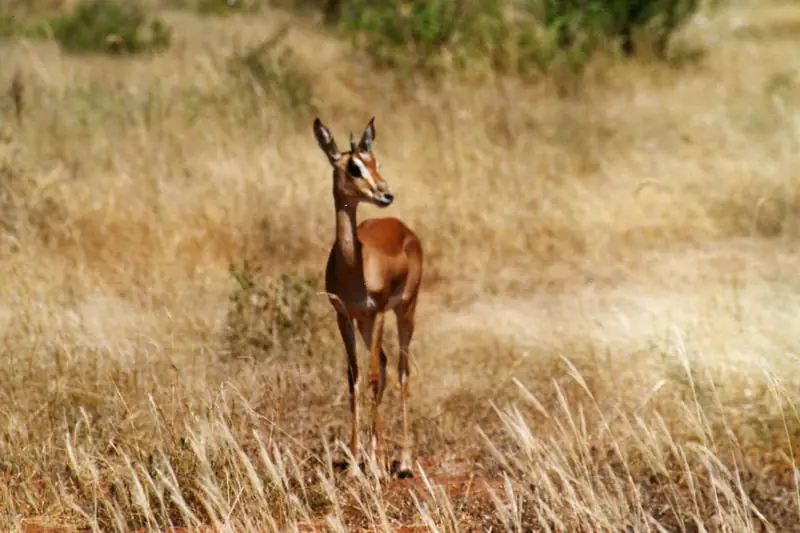
The ivory burns and the Ivory Burning Site Monument
Kenya burned its stockpiles of seized ivory inside Nairobi National Park three times on a large scale: 12 tonnes under President Daniel arap Moi in 1989, 15 tonnes under President Uhuru Kenyatta in March 2015, and 105 tonnes of ivory plus 1.35 tonnes of rhino horn on 30 April 2016.
1989: the first ivory burn
In July 1989 President Moi set fire to about 12 tonnes of elephant ivory in the park. It was the first public burning of a national ivory stockpile anywhere in the world, and it turned the site into a symbol of the campaign that led to the international ban on the ivory trade later that year.
2015 and 2016: Uhuru Kenyatta's burns
On 3 March 2015, World Wildlife Day, President Uhuru Kenyatta burned 15 tonnes of ivory in the park. On 30 April 2016 he lit 11 pyres holding 105 tonnes of elephant ivory and 1.35 tonnes of rhino horn. The stockpile represented about 8,000 elephants and 343 rhinos. It remains the largest ivory burn ever held.
Visiting the Ivory Burning Site
The Ivory Burning Site Monument stands just inside Main Gate. It is a short stop at the start or end of a game drive, with views across the plains and a quiet place to talk about what poaching has cost Kenya. Ask your guide to stop there.
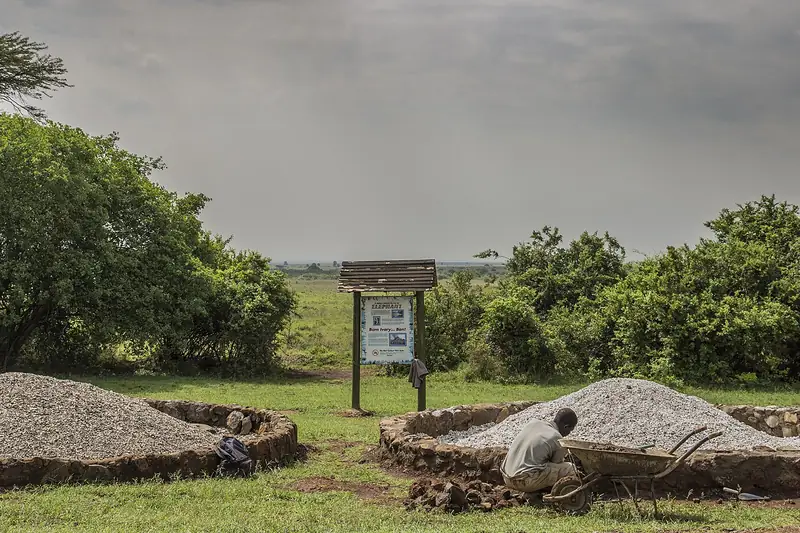
Notable visitors
The park is a regular stop for heads of state and royal visitors because it is so close to the capital. Recent visits include King Charles III and Queen Camilla in 2023 and First Lady Melania Trump in 2018.
- King Charles III and Queen Camilla visited on 1 November 2023 during their state visit to Kenya. Their programme included the park and its conservation work, one of the highlights of the visit.
- Melania Trump, then First Lady of the United States, visited the Sheldrick nursery and toured the park in October 2018 during her Africa trip.
- John Kerry, as US Secretary of State, fed a baby elephant at the Sheldrick nursery.
- David Granger, then President of Guyana, toured the park in December 2017.
- Denis Sassou Nguesso, President of the Republic of the Congo, visited in May 2024 while in Nairobi for the African Development Bank meetings.
Map of Nairobi National Park
The park is a long triangle south of the city. Main Gate and the Safari Walk are at the north-west corner on Lang'ata Road, East Gate faces JKIA and Mombasa Road, the Mbagathi Gate is on Magadi Road in the south-west, and the Hippo Pools lie by the Mbagathi River in the south-east.
| Place | Where | What it is |
|---|---|---|
| Main Gate and KWS headquarters | North-west corner, Lang'ata Road | The main public entrance, with ticketing and visitor parking |
| Ivory Burning Site Monument | Just inside Main Gate | Site of the 1989, 2015 and 2016 ivory burns |
| Nairobi Safari Walk and Animal Orphanage | Beside Main Gate, outside the fence | KWS boardwalk sanctuary and rescue centre |
| Sheldrick orphan elephant nursery | South-west, reached through Mbagathi Gate on Magadi Road | Public visiting hour for the baby elephants, booked with the Trust |
| Nairobi Dam and other dams | Centre of the park | Permanent water that draws herds in the dry season |
| Hippo Pools and nature trail | South-east, by the Mbagathi River | Walking trail with a ranger, hippos and crocodiles in the river |
| East Gate | East side, off Mombasa Road near JKIA | Entrance for airport layovers and the eastern plains |
| Picnic sites | Several, including Impala Point and Kingfisher | Designated places to leave the vehicle and eat |
| SGR bridge | Crosses the park from north-east to south-west | The elevated Standard Gauge Railway line |
| Kitengela plains | Beyond the southern boundary | Open dispersal area for migrating herds |
Picnic sites are the only places, other than the Hippo Pools trail and marked viewpoints, where you may step out of the vehicle. Our safari glossary explains the terms you will see on the park map.
Nairobi National Park gates
Three gates are open to ordinary visitors: Main Gate on Lang'ata Road, East Gate near Mombasa Road and JKIA, and Mbagathi Gate on Magadi Road. Maasai Gate is for annual pass holders. Banda Gate is used by KWS staff, and Cheetah Gate and Lang'ata Gate are closed. All gates are cashless and open 06:00 to 18:00.
| Gate | Location | Status | Best for |
|---|---|---|---|
| Main Gate | Lang'ata Road, at KWS headquarters | Open | Visitors from the CBD, Westlands, Kilimani, Upper Hill and Wilson Airport. Next to the Safari Walk and Ivory Burning Site |
| East Gate | Off Mombasa Road via East Gate Road | Open | JKIA layovers, Mombasa Road hotels, the eastern plains and Hippo Pools |
| Mbagathi Gate (Workshop Gate) | Magadi Road, south-west side | Open (to the public since 23 November 2021) | The Sheldrick nursery, Ongata Rongai, Karen and southern Lang'ata |
| Maasai Gate | South-west side | Annual pass holders | Regular visitors with a KWS annual pass |
| Banda Gate | Western boundary, near KWS residences | KWS staff use | Not a visitor entrance |
| Lang'ata Gate | Lang'ata side | Closed to visitors | Not in use for tourists |
| Cheetah Gate | Southern side | Closed | Not in use. Some maps still show it |
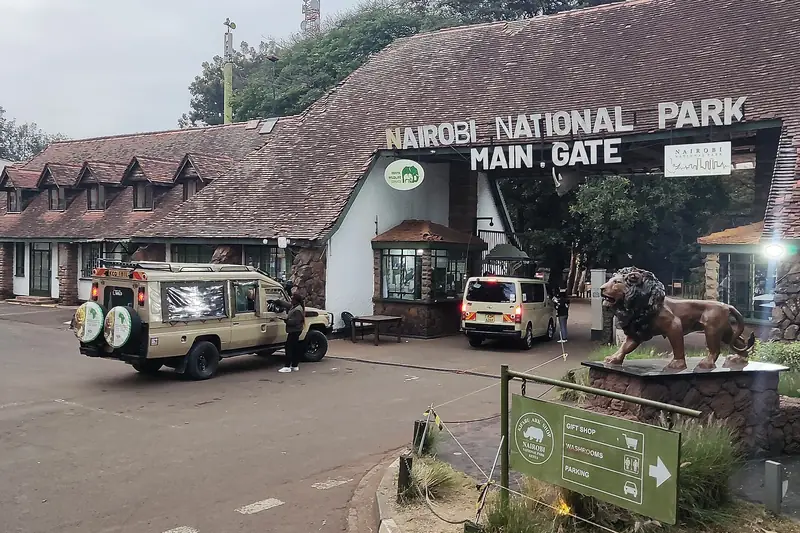
Main Gate
Main Gate is the park's front door. It sits beside the KWS headquarters on Lang'ata Road, about 8 km from the CBD, close to Wilson Airport. Most of our half-day game drives enter here at 06:00 after a 05:00 hotel pickup. The Nairobi Safari Walk and the Animal Orphanage are right beside it, so they are easy to add on the way out.
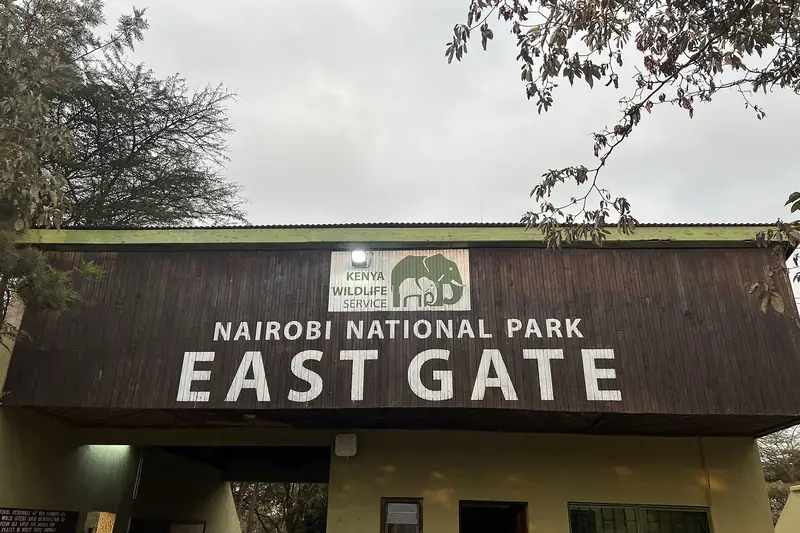
East Gate
East Gate faces Mombasa Road and the airport. It is usually 20 to 40 minutes from JKIA, which makes it the gate for layover safaris. It is quieter than Main Gate and puts you closer to the eastern plains, Athi Basin and the Hippo Pools.
Mbagathi Gate
Mbagathi Gate on Magadi Road was once the KWS workshop entrance. It opened to the public in November 2021 and is now the access point for the Sheldrick orphan elephant nursery. It suits guests staying in Karen, southern Lang'ata or Ongata Rongai. See the full gates guide for directions.
Which gate is best for your hotel?
Tell us where you are staying. We pick you up at 05:00 and choose the gate that gets you inside at 06:00.
Neighbourhoods around the park
The park is ringed by city on three sides. Lang'ata, Karen, South C, Industrial Area, Embakasi and the two airports press against the fenced north, east and west, while Kitengela, Athi River and Ongata Rongai lie to the south and south-west.
| Area | Side | What it is |
|---|---|---|
| Lang'ata | North-west | Residential suburb along Lang'ata Road, home to Main Gate, the Giraffe Centre and Bomas of Kenya |
| Karen | West | Leafy suburb beside the Ngong Forest, home to the Karen Blixen Museum |
| Kitengela | South, beyond the Mbagathi River | Fast-growing town about 34 km south of Nairobi, on the dispersal plains |
| Athi River (Mavoko) | South-east | Industrial town in Machakos County on the Athi River |
| Embakasi | East | Eastlands district about 18 km south-east of the CBD, home to JKIA |
| South C | North | Residential estate next to Wilson Airport that borders the park |
| Industrial Area | North | Factory district along the northern fence |
| Kibera | North-west | One of the largest informal settlements in Africa, about 6.6 km from the city centre |
| Ongata Rongai | South-west | Town about 17 km south of the CBD on Magadi Road, near Mbagathi Gate |
| JKIA | East | Kenya's main international airport, minutes from East Gate |
| Wilson Airport | North | Domestic and light aircraft airport about 4 km south of the CBD, near Main Gate |
This closeness is what makes the park unique, and it is also the source of most of its problems: noise, pollution, roads and the loss of open land. The next sections cover those pressures.
The SGR bridge through the park
The Standard Gauge Railway crosses Nairobi National Park on a 6.58 km bridge, the Nairobi National Park Super Major Bridge. It is part of the 120 km Nairobi to Naivasha Phase 2A line, which opened on 16 October 2019.
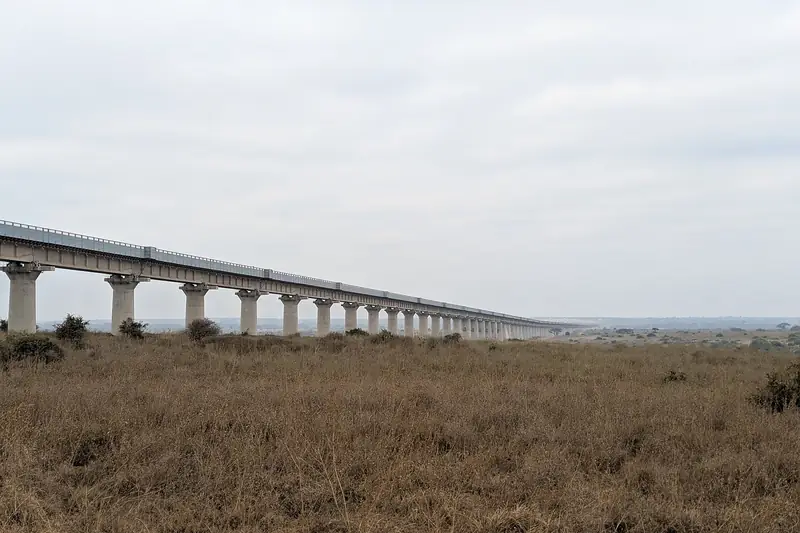
Conservation groups objected strongly to running a railway through the park. In response the route was built as an elevated bridge rather than an embankment, at an extra cost of about $20 million. The deck averages about 18 m high, rising from about 8 m where it enters in the north to about 41 m at its southern exit, so animals can pass beneath. The piers stand at least 32 m apart, and a sound barrier about 5.9 km long and 2 m high runs along it to reduce noise.
From inside the park the bridge is hard to miss. Some visitors find it an eyesore; others photograph lions and giraffes with a train passing overhead. Either way, it is now part of the view.
Controversies and pressures
The park faces pressure from roads, rail, building plans, pollution and the closing of its open southern rangeland. Each of these has led to public debate, court cases or protests.
Southern Bypass
The Nairobi Southern Bypass took about 53 acres of land from the park, and a link road of about 4.153 km to the Inland Container Depot also cuts through park land. Conservationists argued the roads set a precedent for chipping away at protected land.
Standard Gauge Railway
The SGR Phase 2A line was the most contested project of all. Court challenges and protests did not stop it, but they changed it: the line was raised onto a bridge rather than laid across the plains.
Nairobi Expressway and the eastern edge
The elevated Nairobi Expressway links JKIA with Westlands along Mombasa Road and Uhuru Highway, north of the park. For visitors it has cut travel time between the airport and the city.
Encroachment and fences
The southern dispersal area is shrinking as Kitengela and the Athi plains are subdivided, fenced and built on. When the old group ranches were split into private plots, fences began to block the routes animals use to leave and return. Groups such as the Kitengela Landowners Association and conservation lease schemes pay landowners to keep land open.
Lions leaving the park
Lions sometimes walk out of the park into nearby estates and towns, usually through the open south or damaged fences. In March 2016 a 13-year-old male known as Mohawk was shot by KWS rangers in Isinya after clawing a man in a crowd. The next day a young lion called Lemek was found speared near Old Kitengela. KWS said fences had been damaged during construction of the Southern Bypass and the SGR. Read more in our wildlife guide.
Hotel and eco-lodge plans
A draft KWS management plan for 2020 to 2030 proposed an eco-lodge, a high-end restaurant and an amphitheatre inside the park. Friends of Nairobi National Park, WildlifeDirect chief executive Paula Kahumbu and other groups opposed it. In 2020 the tourism ministry under Cabinet Secretary Najib Balala directed KWS to suspend the hotel plan and extend public participation.
River pollution
Effluent from factories and settlements along the northern boundary flows into the park's streams and on into the Mbagathi and Athi rivers. Water quality in the dams and rivers remains a concern for wildlife.
Park fee changes
Park entry fees are set by KWS through legal notices. The current rates come from Legal Notice No. 160 of 2025. See today's rates on our park fees page.
Aviation
The park lies under the approach to Wilson Airport. On 5 March 2024 a Cessna 172 crashed in the park after a mid-air collision with a Safarilink Dash 8, killing the two people on board the Cessna.
Ecology and wildlife
Nairobi National Park holds four of the Big Five: lion, leopard, buffalo and black rhino. There are no wild elephants. Giraffe, zebra, wildebeest, eland, hartebeest, impala, gazelles, hippos, crocodiles, cheetahs and hyenas also live here, along with more than 500 bird species.
Habitats
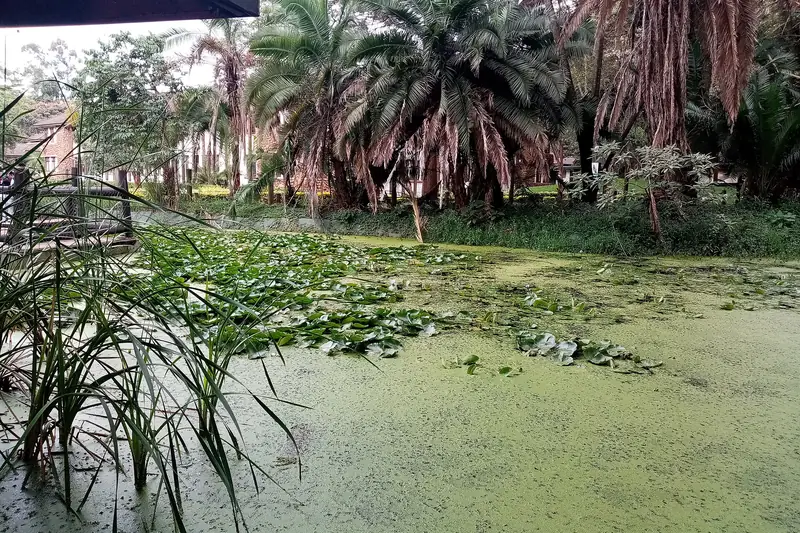
The east of the park is open grass plain dotted with acacia. The higher west holds dry upland forest with olive, croton, Brachylaena and Cape chestnut trees. Riverine forest lines the Mbagathi River in the south, and rocky valleys with candelabra euphorbias cut across the plains. Man-made dams hold water through the dry season.
Rhinos
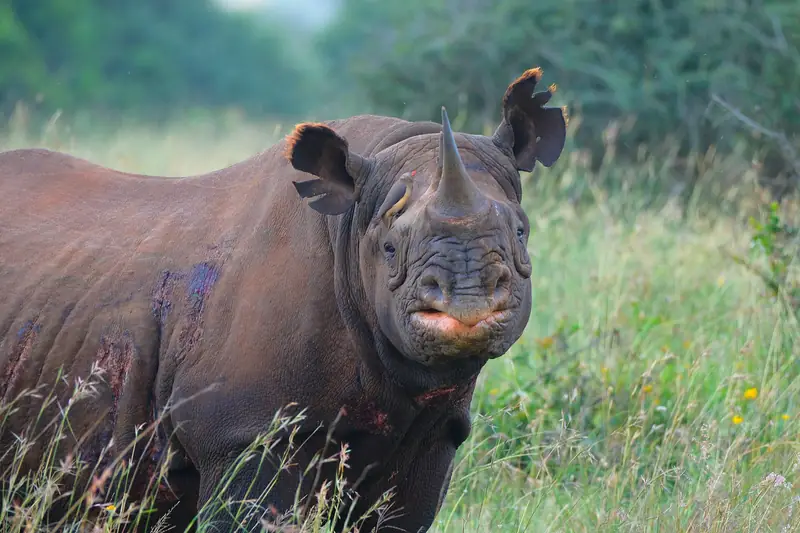
The park is one of Kenya's most important rhino sanctuaries. Animals bred here have been moved to restock other parks, which earned it the nickname "Kifaru Ark".
Lions
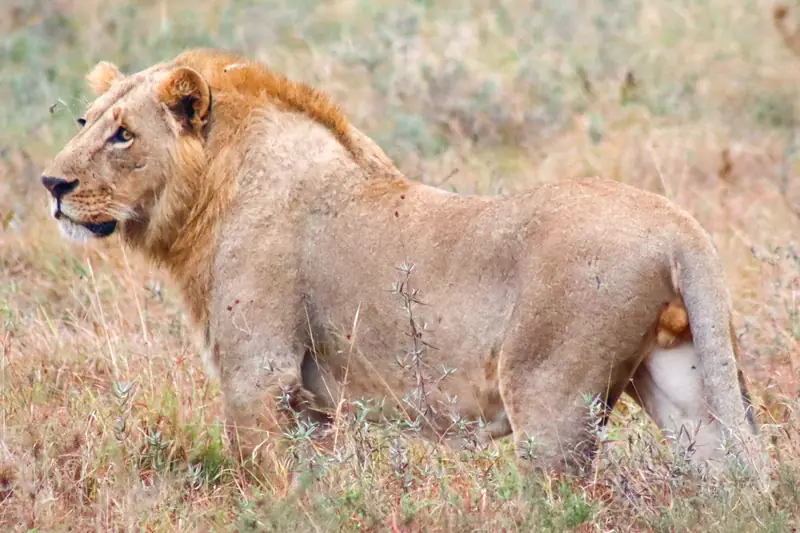
The park has been recognised as a Lion Conservation Unit since 2005. Its lions are among the most photographed in Africa because they are so often seen with buildings behind them. See our animals guide.
Big Five status
| Animal | Present? | Notes |
|---|---|---|
| Lion | Yes | Seen on most mornings by experienced guides, never guaranteed |
| Leopard | Yes | Shy and rarely seen |
| Buffalo | Yes | Common on the plains |
| Black rhino | Yes | Strong population |
| Elephant | No wild elephants | See orphans at the Sheldrick nursery, or visit Amboseli for wild herds |
Want wild elephants with Kilimanjaro behind them? Plan an Amboseli safari from Nairobi.
Birds
With more than 500 recorded species, the park is one of the best birding sites near any capital. Ostrich, secretary birds, crowned cranes, kori bustards and vultures work the plains, while the forest edges and the river hold sunbirds, turacos and kingfishers. Migrant birds from Europe and Asia add to the list between about October and April. Bring binoculars: on a quiet morning a good guide will point out dozens of species before breakfast.
Seasons and the best time to visit
The park is good all year. The dry seasons, roughly June to October and January to February, bring animals to the dams and make them easier to find. The long rains of about March to May and the short rains around November turn the plains green, and many herds move south out of the park.
Mornings are best in every season. Gates open at 06:00, and the first hours bring the coolest air and the most active predators, which is why our pickups leave at 05:00. Read the best time to visit guide for month-by-month detail.
Facilities
Facilities are simple. Main Gate has ticketing, parking, toilets and the KWS offices. Inside the park there are picnic sites with toilets, the Hippo Pools nature trail, and an education centre near Main Gate.
- Nairobi Safari Walk: a raised boardwalk beside Main Gate. See Safari Walk fees.
- Nairobi Animal Orphanage: KWS rescue centre next to the Safari Walk.
- Wildlife Conservation Education Centre: KWS education facility used by school groups.
- Sheldrick nursery: one public hour a day, booked with the Trust. See Sheldrick fees.
- Payment: all gates are cashless. Pay on eCitizen; see how to pay the park fee.
Getting there
By road, Main Gate is about 8 km from the CBD along Lang'ata Road, past the Lang'ata army barracks. East Gate is off Mombasa Road, usually 20 to 40 minutes from JKIA. Most visitors come with a tour vehicle, since you need a closed vehicle to drive inside.
We collect you from your hotel at 05:00 and reach the gate for opening at 06:00. A private half-day drive costs $300 per group of 1 to 6 guests, a full day $380 per group, and the weekday shared tour $75 (tour van) or $80 (Land Cruiser) per person. Kenyan residents pay KSh 6,000 or KSh 6,500. Weekend Land Cruiser drives are $55 or KSh 4,500 per person. Park fees are paid separately. Compare options on the tours page, or read how to get to the park.
Staying in Nairobi a few days? See our guide to things to do in Nairobi, where to stay in Nairobi and JKIA airport transfers.
Book a Nairobi National Park game drive
05:00 hotel pickup, at the gate for 06:00, private or shared. Tell us your date and group.
Planning the rest of your trip? See things to do in Nairobi for the city, where to stay in Nairobi for hotels near the park, the JKIA layover guide if you are between flights, and JKIA airport transfers for the airport run.
Related pages
Frequently asked questions
How big is Nairobi National Park?
About 117 square kilometres. It is fenced on the north, east and west, and open to the south.
When was Nairobi National Park founded?
In 1946. It was the first national park in Kenya, created after a campaign led by Mervyn Cowie.
How far is Nairobi National Park from the city centre?
About 7 km. Main Gate on Lang'ata Road is about 8 km from the CBD by road.
Which gates are open?
Main Gate, East Gate and Mbagathi Gate are open to visitors from 06:00 to 18:00. Maasai Gate is for annual pass holders. Cheetah Gate and Lang'ata Gate are closed.
Are there elephants in Nairobi National Park?
There are no wild elephants. You can see orphaned elephants at the Sheldrick nursery, reached through Mbagathi Gate.
Where is the Ivory Burning Site?
Just inside Main Gate. It marks the 1989, 2015 and 2016 ivory burns, the last of which destroyed 105 tonnes of ivory.
Does the SGR pass through the park?
Yes. The Standard Gauge Railway crosses the park on a 6.58 km elevated bridge opened in 2019.
Can I do a night game drive?
No. The park is open 06:00 to 18:00 and night drives are not offered.
What time do tours start?
We pick you up at 05:00 so you reach the gate when it opens at 06:00.
Updated 24 October 2026.
Book this safari
Send the date, the group, and the pickup. We confirm availability on WhatsApp or email, with the tour price and the park fees to budget. See our deposit and cancellation policy.