Nairobi National Park animals
Nairobi National Park animals include lions, buffalo, leopard, cheetah, giraffe and over 400 bird species, all on the edge of Kenya's capital. This guide covers each species: where to look, the best time, behaviour and how to identify it.
Updated 24 October 2026.
What animals can you see in Nairobi National Park?
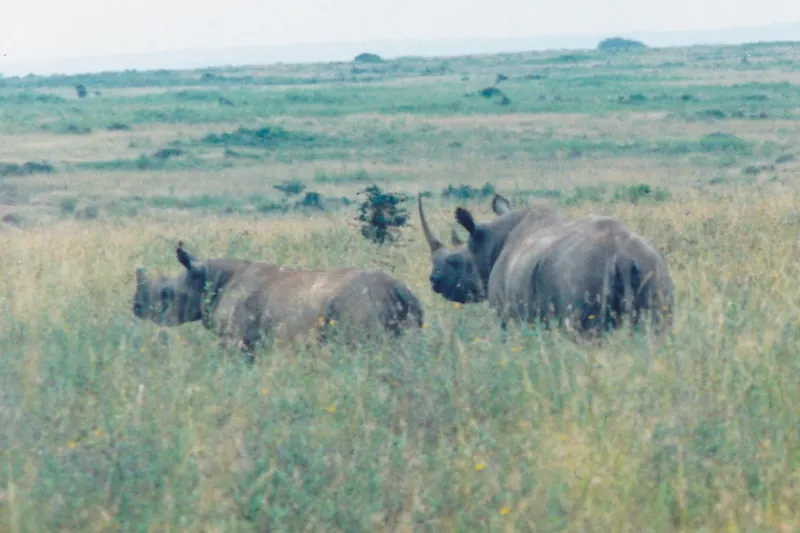
The park has over 100 mammal species and over 400 bird species. Four of the Big Five live here: lion, leopard, buffalo and rhino. Zebra, giraffe, buffalo, ostrich and antelope are near-certain; lions and rhinos are likely on a morning drive; leopard and cheetah are rare.
| Animal | Chances and numbers |
|---|---|
| Lion | Present; 45 estimated in 2019 (KWS plan). Morning best. |
| Black and white rhino | About 175 in 2025 (KWS). Good chance. |
| Buffalo | Common on the plains and at dams. |
| Leopard | Present, rarely seen. |
| Cheetah | Present on the southern plains, rare. |
| Maasai giraffe | 99 in 2019 (KWS plan). Very likely. |
| Zebra | Very likely. |
| Eland | Likely, at a distance. |
| Hippo | At Hippo Pools. |
| Nile crocodile | Dams and rivers. |
| Hyena | Spotted and striped; mostly at night. |
| Jackal | Fairly likely on the plains. |
| Ostrich | Very likely. |
| Wildebeest | Some, mostly in the dry season. |
| Antelopes and warthog | Very likely. |
| Birds | 400+ species. |
| Elephant | None in the wild. See Sheldrick. |
No sighting is guaranteed. A morning drive is the best single chance.
Lions in Nairobi National Park
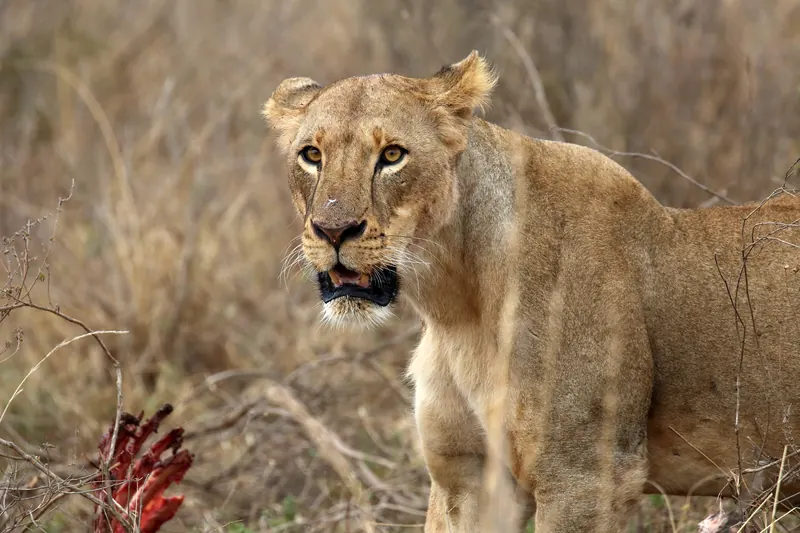
Nairobi National Park has a resident lion population. The 2019 estimate was 45 lions plus 4 to 7 cubs, up from 16 in early 2004. KWS names prides such as Kingfisher, Athi and Mokoyet. Lions are often in long grass or bush rather than on open roads.
- Where to look: Grass plains and the river valleys in the south, and near the dams.
- Best time: The first two hours after the 06:00 opening; lions rest through the heat of the day.
- Behaviour: They hunt mainly at dawn, dusk and night and spend much of the day lying up.
- ID tip: Males have manes; females are smaller and plain tawny.
Lions in Nairobi National Park
Want to see Nairobi National Park lions? Book a safari with us!
Rhinos (black and white) in Nairobi National Park
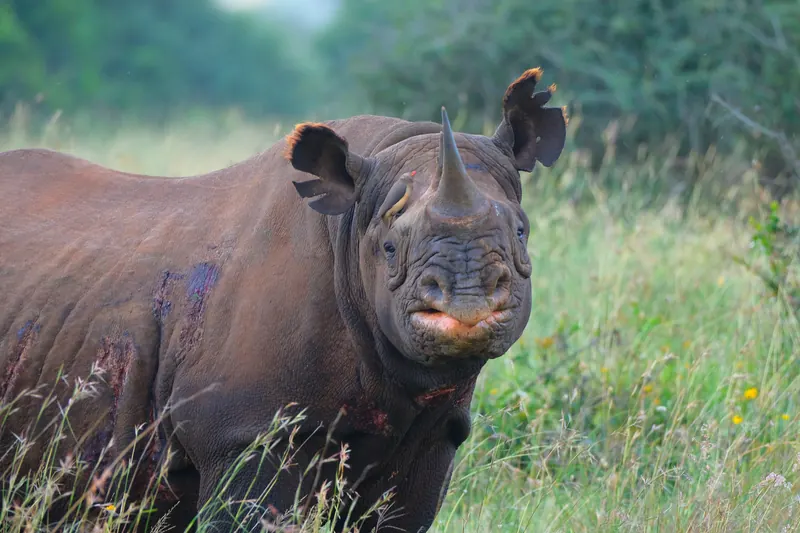
Rhinos are the park's best-known animal. In July 2025 the park held about 175 rhinos: 126 black and 49 white. That is above the 90 to 100 the park can support, and KWS is moving some to new areas. The park is a KWS rhino sanctuary.
- Where to look: Bush and grassland across the park, often in the south-west and along the valleys.
- Best time: Morning and late afternoon, when they feed.
- Behaviour: Black rhinos browse shrubs and are often solitary; white rhinos graze in small groups.
- ID tip: A white rhino has a square upper lip and a black rhino a pointed one.
Rhinos in Nairobi National Park
Want to see Nairobi National Park rhinos? Book a safari with us!
Buffalo in Nairobi National Park
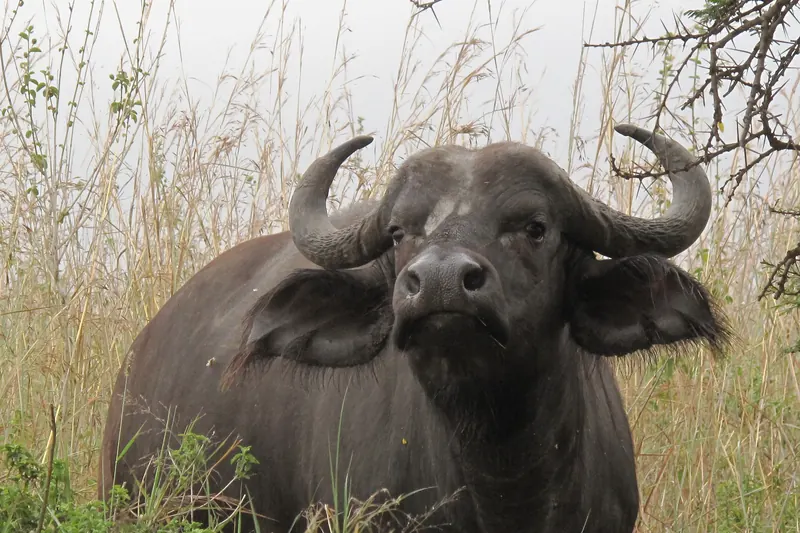
The African buffalo is one of the four Big Five animals present in the park. Herds graze the grass plains and visit the dams to drink and wallow. Buffalo are easy to see but should be given plenty of space.
- Where to look: Open grassland and around the dams.
- Best time: Any time of day; herds are often near water as it gets hot.
- Behaviour: They live in herds and are quick to charge when threatened.
- ID tip: Heavy, dark cattle-like animal with thick curved horns joined across the forehead.
Buffalo in Nairobi National Park
Want to see Nairobi National Park buffalo? Book a safari with us!
Leopards in Nairobi National Park
Leopards live in the park but are shy and often missed. The 2021 national wildlife census recorded only 3, which shows how hard they are to see. Riverine woodland such as Mokoyeti is the place to look.
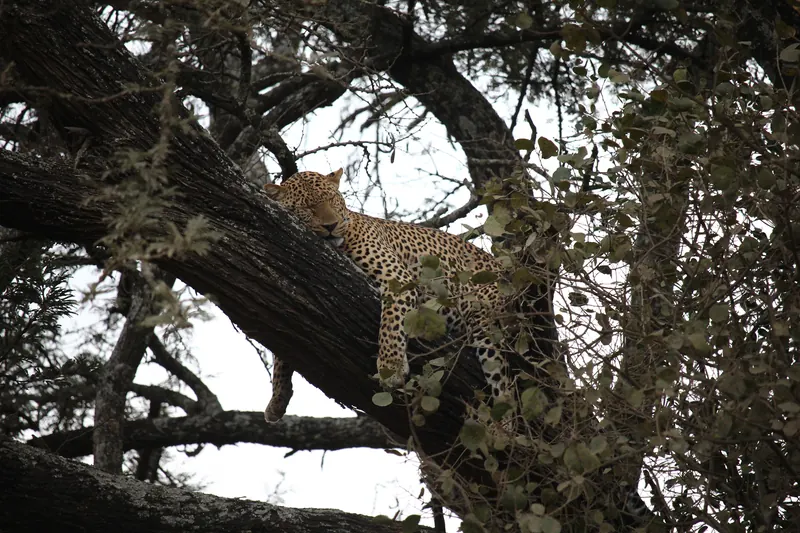
- Where to look: Riverine woodland along the valleys, including Mokoyeti.
- Best time: Early morning, before they settle in cover.
- Behaviour: Solitary and mostly nocturnal; they often rest in trees.
- ID tip: Rosette spots, not solid spots; long tail with a white tip underneath.
Leopards in Nairobi National Park
Want to see Nairobi National Park leopards? Book a safari with us!
Cheetahs in Nairobi National Park
Cheetahs use the open southern plains of the park and the land beyond. The 2021 national census recorded 4 cheetahs. They are rarer than lions on a typical drive, and they are listed as Vulnerable on the IUCN Red List.
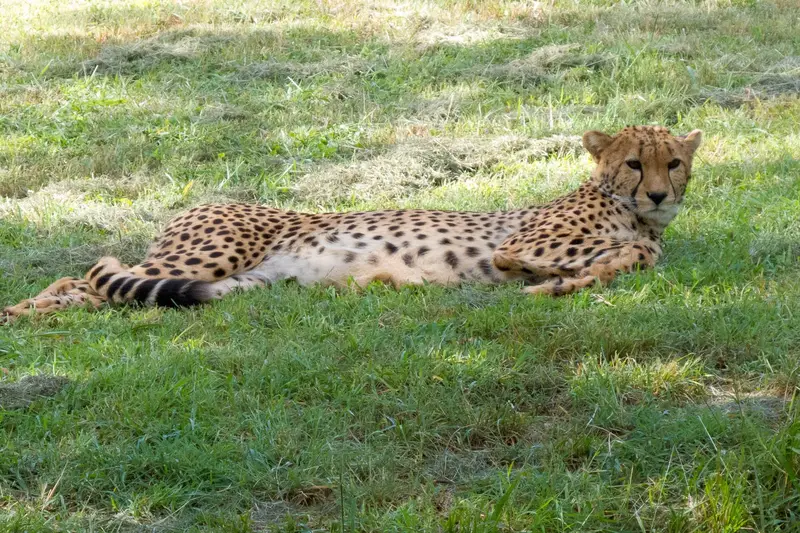
- Where to look: Open short-grass plains in the south, toward Kitengela.
- Best time: Morning; cheetahs hunt by day, mostly in the cooler hours.
- Behaviour: They chase prey at high speed after stalking close.
- ID tip: Solid round spots and a black tear line from each eye to the mouth.
Cheetahs in Nairobi National Park
Want to see Nairobi National Park cheetahs? Book a safari with us!
Maasai giraffes in Nairobi National Park
The Maasai giraffe is the giraffe of Nairobi National Park. The park had 99 Maasai giraffes in the park in 2019. They are one of the easiest animals to find and the classic skyline photo. The Giraffe Centre in Lang'ata keeps a different subspecies, the Rothschild's giraffe.
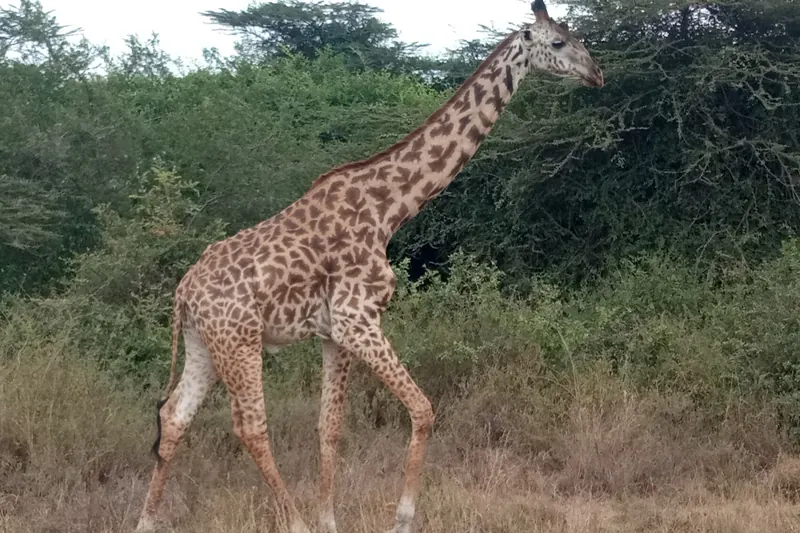
- Where to look: Acacia bush and open woodland across the park.
- Best time: All day; morning light is best for skyline photos.
- Behaviour: They browse treetops and move in loose groups.
- ID tip: Jagged, leaf-shaped patches, unlike the neat blocks of other giraffes.
Giraffes in Nairobi National Park
Want to see Nairobi National Park giraffes? Book a safari with us!
Zebras in Nairobi National Park
Plains zebras are among the most reliable sightings. Many plains animals move between the park and the southern plains: 70 to 80% of the park's animals roam outside its boundary at times.
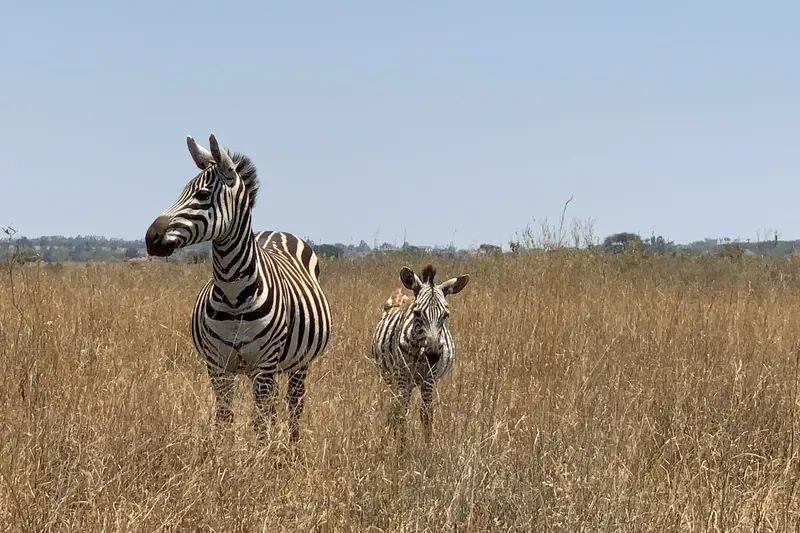
- Where to look: Open grassland, often with wildebeest and hartebeest.
- Best time: Any time; numbers inside the park are higher in the dry season.
- Behaviour: They graze in family groups and herds and stay alert for predators.
- ID tip: Broad black-and-white stripes that reach under the belly.
Zebras in Nairobi National Park
Want to see Nairobi National Park zebras? Book a safari with us!
Eland in Nairobi National Park
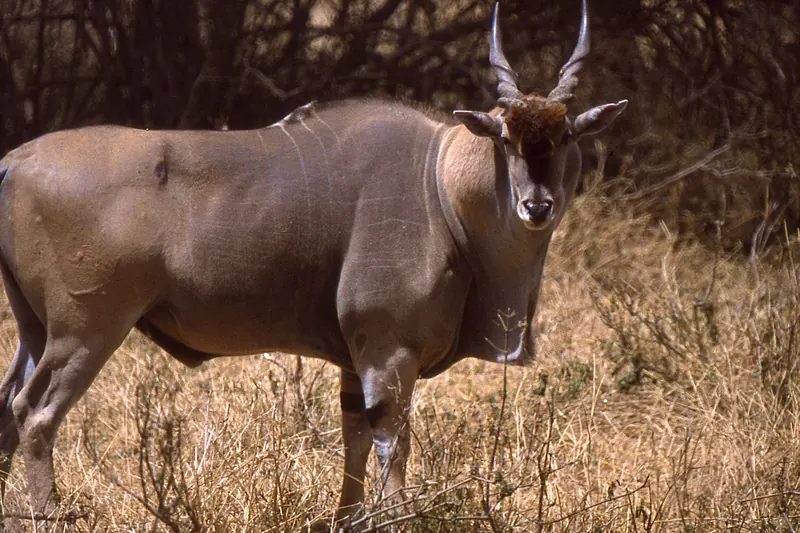
The eland is a large antelope resident in the park. It is wary and tends to keep its distance from vehicles, so binoculars help. Kenya counted 13,581 eland nationally in the 2021 census.
- Where to look: Open plains and bush edges.
- Best time: Morning and late afternoon.
- Behaviour: Shy, in small herds; moves off early when approached.
- ID tip: Pale fawn, cattle-like build, spiral horns on both sexes, a dewlap at the throat.
Want to see Nairobi National Park eland? Book a safari with us!
Hippos in Nairobi National Park
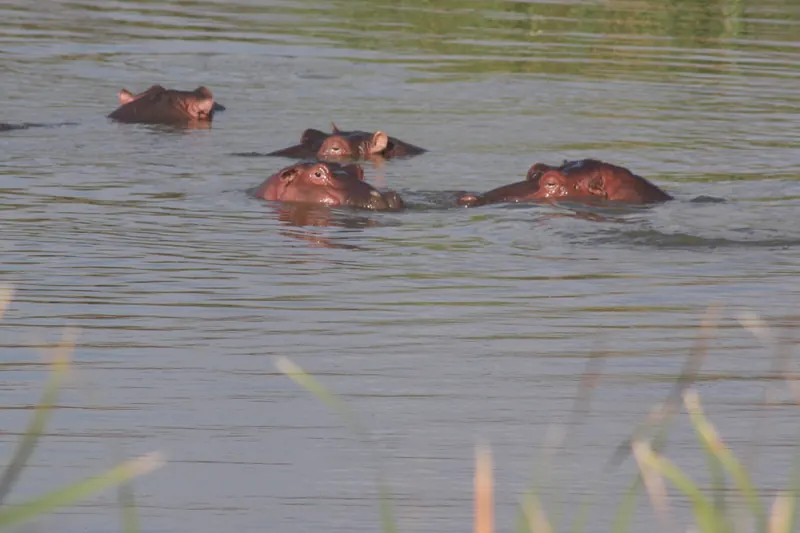
Hippos live in the rivers. They live along the Mbagathi River. Hippo Pools on the Athi and Mbagathi rivers is the place to see them, on the one short walk in the park, escorted by an armed KWS ranger.
- Where to look: Hippo Pools on the southern rivers.
- Best time: Daytime, when they rest in the water.
- Behaviour: They stay in water by day and graze on land at night.
- ID tip: Often only eyes, ears and nostrils show above the water.
Hippos in Nairobi National Park
Want to see Nairobi National Park hippos? Book a safari with us!
Nile crocodiles in Nairobi National Park
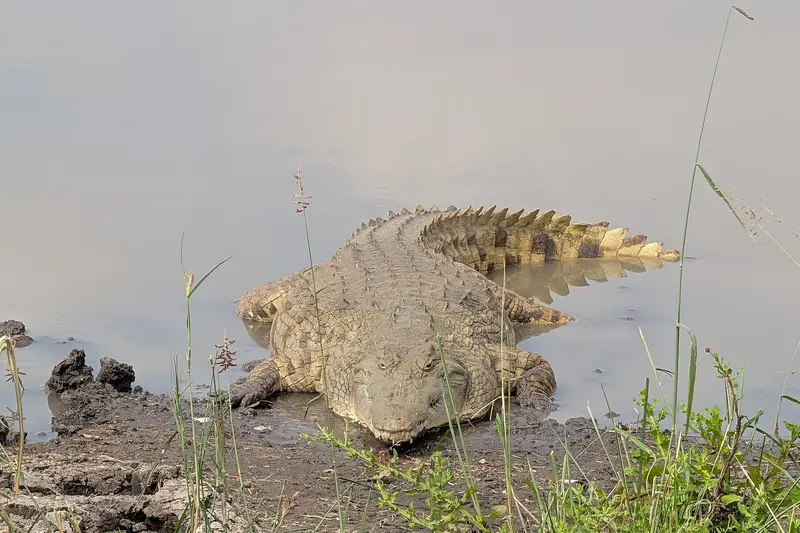
Nile crocodiles live in the park. Crocodiles live in the dams, and they also use the rivers near Hippo Pools. Look along the banks where they bask in the sun, and scan the water surface for eyes and snouts.
- Where to look: The dams and the rivers around Hippo Pools.
- Best time: Mid-morning, when they bask to warm up.
- Behaviour: They lie still on banks or float with only eyes and nostrils showing.
- ID tip: Long, low body with armoured scales; olive to grey colour.
Want to see Nairobi National Park crocodiles? Book a safari with us!
Hyenas in Nairobi National Park
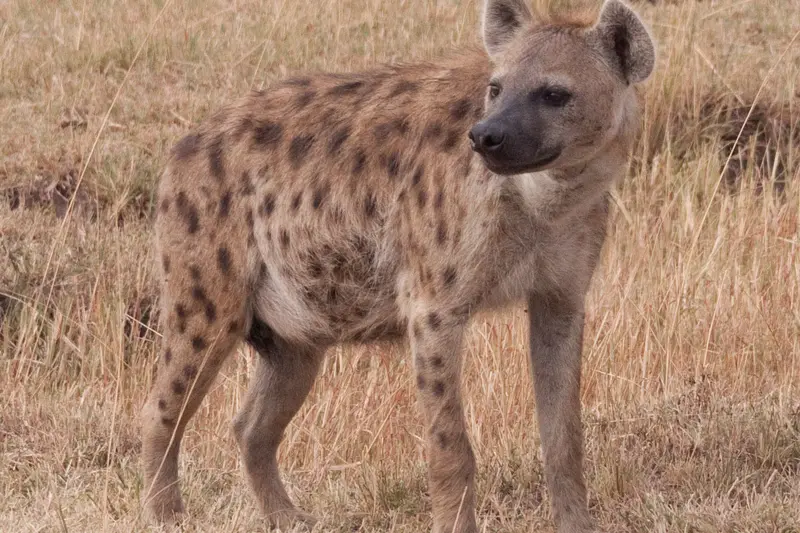
Both spotted and striped hyenas are recorded in Nairobi National Park. They are mostly active at night, so a sighting on a day drive is a bonus, most likely just after the 06:00 opening.
- Where to look: Grassland and around old kills.
- Best time: Right after opening at 06:00.
- Behaviour: Mostly nocturnal; spotted hyenas hunt and scavenge in clans.
- ID tip: Sloping back, round ears and a spotted coat (spotted hyena), or stripes and a mane (striped hyena).
Want to see Nairobi National Park hyenas? Book a safari with us!
Black-backed jackals in Nairobi National Park
Jackals roam the park. The black-backed jackal is a small, quick predator and scavenger, often seen trotting across the plains, near other predators' kills, or resting by the road.
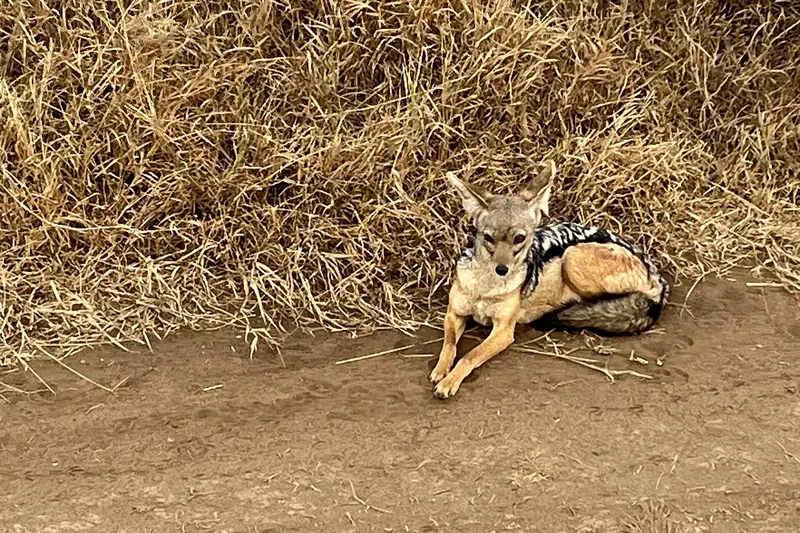
- Where to look: Open plains and road edges.
- Best time: Early morning and late afternoon.
- Behaviour: Usually in pairs; they hunt small animals and scavenge.
- ID tip: Small dog-like shape with a dark, silver-flecked saddle along the back.
Want to see Nairobi National Park jackals? Book a safari with us!
Ostriches in Nairobi National Park
Ostriches are common on the open plains. The 2021 census counted 2,354 Maasai ostriches across Kenya. Males are black and white, while females are grey-brown.
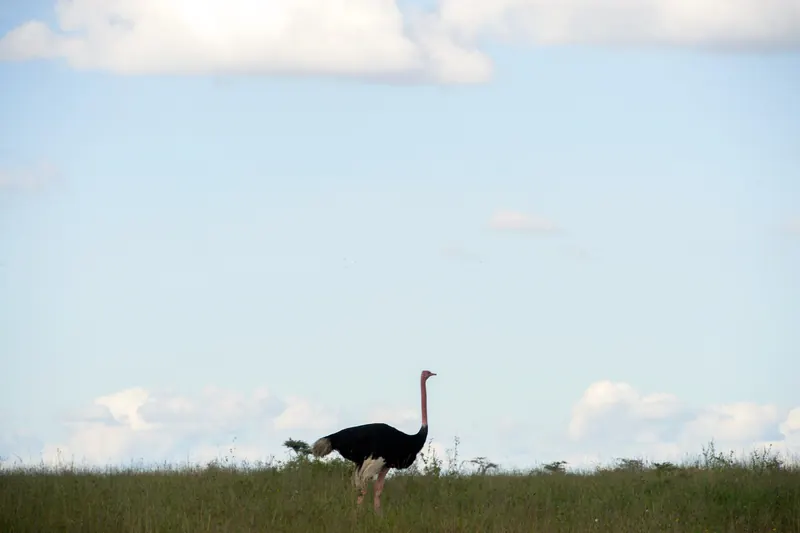
- Where to look: Open grassland.
- Best time: Any time of day.
- Behaviour: They walk the plains in small groups and can run fast.
- ID tip: Males are black and white, with pink neck and legs in the breeding season; females are grey-brown.
Want to see Nairobi National Park ostriches? Book a safari with us!
Wildebeest and the Athi-Kapiti migration in Nairobi National Park
Wildebeest once migrated in large numbers between the park and the Athi-Kapiti plains. This migration, over 30,000 animals in the 1960s, has collapsed because fences and building block the routes. Some wildebeest still use the park, mostly in the dry season.
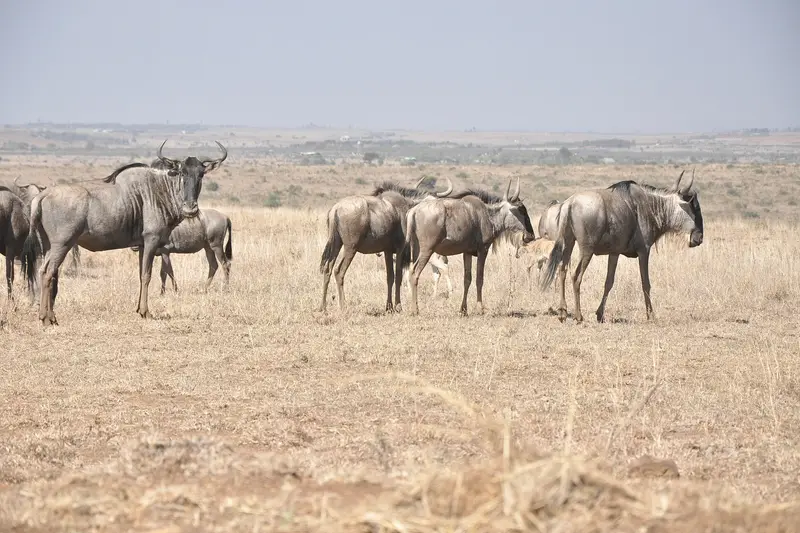
- Where to look: Southern plains near the open boundary.
- Best time: The dry season, when animals move in toward water.
- Behaviour: They graze in herds, often mixed with zebra.
- ID tip: Dark grey with a beard, a shaggy mane and curved horns.
Want to see Nairobi National Park wildebeest? Book a safari with us!
Antelopes and warthogs in Nairobi National Park
The park has impala, Thomson's and Grant's gazelles, hartebeest and waterbuck. The 2021 census recorded 546 hartebeest, 91 gazelles, 22 waterbuck and 40 warthogs, and these numbers fell by about 70% as the southern routes closed.
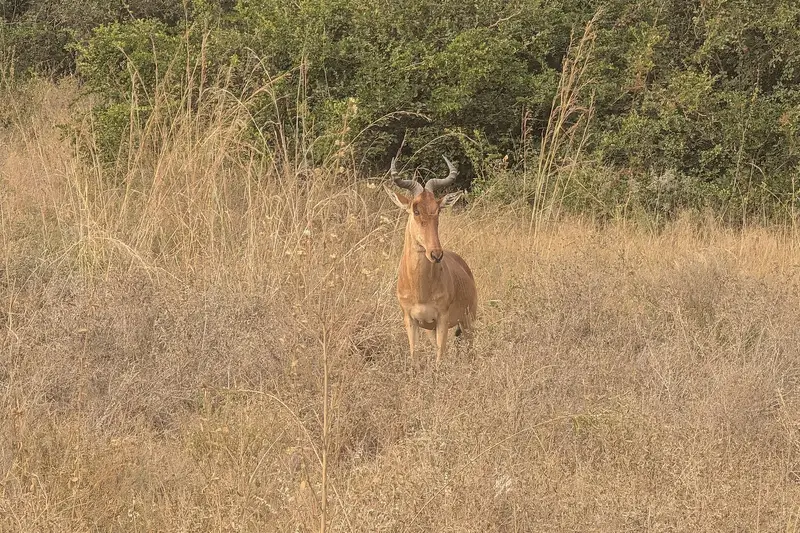
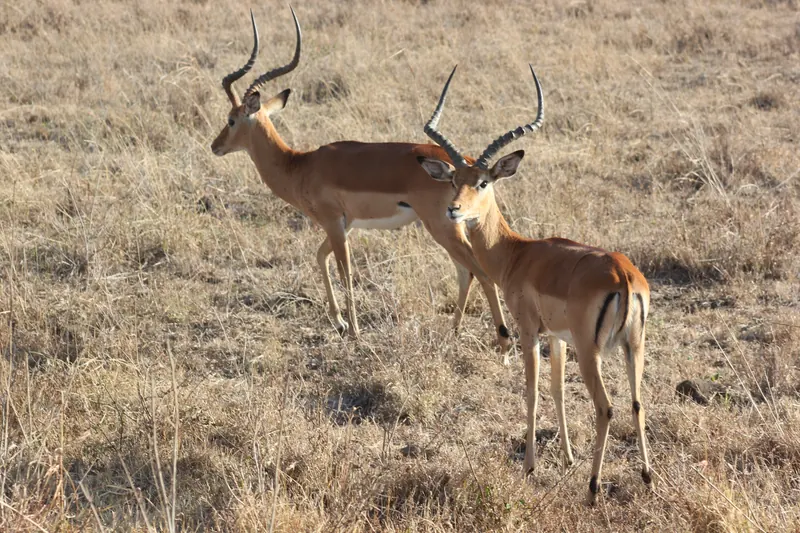
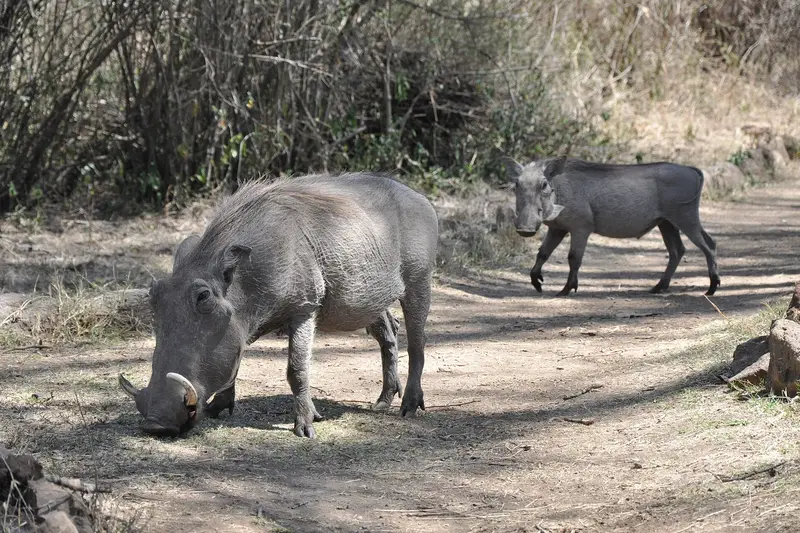
- Where to look: Impala at bush edges; gazelles and hartebeest on the open plains; waterbuck near water; warthogs on short grass.
- Best time: Any time; morning is best for photos.
- Behaviour: Most graze or browse in herds and watch for predators.
- ID tip: Hartebeest have a long face and bent horns; Thomson's gazelle has a black side stripe; waterbuck stay close to water.
Want to see Nairobi National Park antelopes? Book a safari with us!
Birds (400+ species) in Nairobi National Park
Nairobi National Park has over 400 permanent and migratory bird species. Threatened species here include the grey crowned crane (Endangered), secretarybird (Vulnerable), white-backed and Rüppell's vultures (Critically Endangered) and martial eagle (Vulnerable).
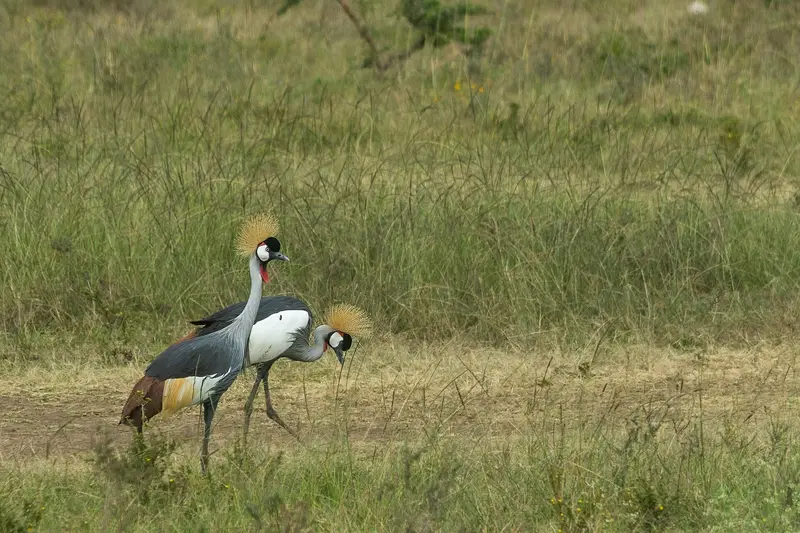
- Where to look: The dams, rivers and open grassland.
- Best time: Early morning, and the wet season for migrants.
- Behaviour: Water birds gather at dams; raptors hunt over the plains.
- ID tip: Grey crowned cranes have a golden crest; secretarybirds stride the grass on long legs.
Birds in Nairobi National Park
Want to see Nairobi National Park birds? Book a safari with us!
Are there elephants in Nairobi National Park?
No. Nairobi National Park has no wild elephant population. To see elephants in Nairobi, visit the orphaned elephants at the Sheldrick Wildlife Trust nursery beside the park, which our weekday 3-in-1 tour combines with a game drive and the Giraffe Centre.
For wild herds, Amboseli elephants roam below Mount Kilimanjaro, 4 to 5 hours from Nairobi.
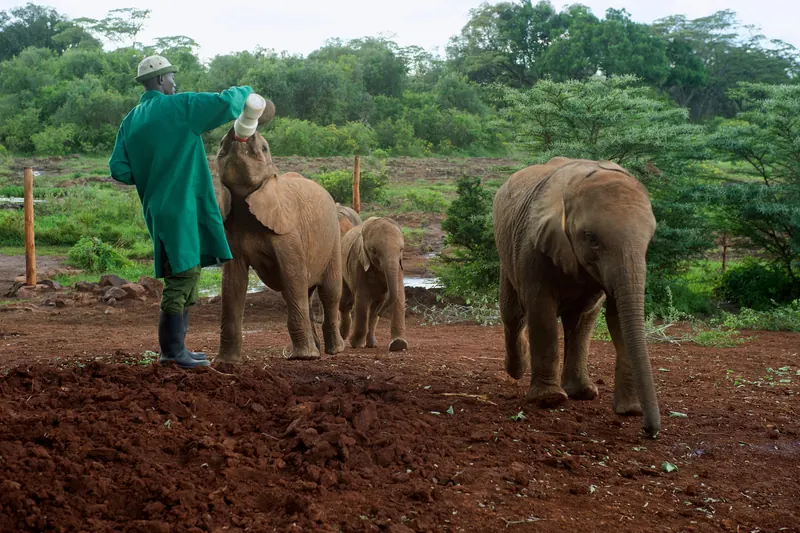
Sheldrick entry and the 3-in-1 tour.
Want to see Nairobi National Park elephants at Sheldrick? Book a safari with us!
Nairobi National Park animals FAQ
Quick answers on which animals live in Nairobi National Park, how many rhinos and lions there are, whether elephants are present, the Big Five and the best time to see wildlife.
What animals are in Nairobi National Park?
Lion, black and white rhino, buffalo, leopard, cheetah, Maasai giraffe, zebra, eland, hippo, Nile crocodile, hyena, jackal, ostrich, wildebeest, antelopes, warthog and over 400 bird species. There are no wild elephants.
How many rhinos are in Nairobi National Park?
About 175 in July 2025, 126 black and 49 white.
How many lions are in Nairobi National Park?
About 45 lions plus 4 to 7 cubs in 2019.
Are there elephants in Nairobi National Park?
No wild elephants. See orphaned elephants at the Sheldrick Wildlife Trust nursery next to the park.
Can you see the Big Five in Nairobi National Park?
Four of them: lion, leopard, buffalo and rhino. No sighting is guaranteed.
What is the best time to see animals?
The early morning, right after the gates open at 06:00, and the dry season, when animals gather near water.