Nairobi National Park glossary
This Nairobi National Park glossary explains 85 words you will hear on a game drive: safari terms, places in the park, Kenya Wildlife Service fee terms, wildlife names and Swahili words. Each entry is short and links to a fuller page where we have one.
Updated 24 October 2026.
What does this glossary cover?
The glossary has 85 entries in five groups: safari terms such as game drive and kopje, places such as Hippo Pools and the Ivory Burning Site, KWS fee terms such as resident and eCitizen, the animals of Nairobi National Park, and everyday Swahili words like simba, twiga and karibu.
| Group | Entries |
|---|---|
| KWS term | 10 |
| Place | 19 |
| Safari term | 12 |
| Swahili | 21 |
| Wildlife | 23 |
| Total | 85 |
Nairobi National Park terms from A to Z
Jump to a letter below. Where a term has its own page on this site, such as lions or tickets, the entry links to it.
A
- asante (Swahili)
- Swahili for "thank you". Your guide will hear it often.
- Athi Dam (Place)
- A dam in the south of the park, close to the Athi River. Water draws herds and birds, so it is a regular stop on a full-day drive.
- Athi pride (Wildlife)
- One of the lion prides named by KWS in Nairobi National Park. See lions.
- Athi River (Place)
- The river along the southern edge of the park, together with the Mbagathi. Hippo Pools sits on this river system.
- Athi-Kapiti plains (Place)
- The open plains south of the park. The park is unfenced on its southern side, so animals move between the park and these plains through Kitengela.
B
- Baboon (Wildlife)
- The olive baboon lives in the park. Never feed baboons; see the park rules.
- Big Five (Safari term)
- Lion, leopard, buffalo, rhino and elephant. Nairobi National Park has four of them; there are no wild elephants in the park. For wild herds, see Amboseli elephants.
- Binoculars (Safari term)
- KWS lists binoculars among the things to bring. See what to bring.
- Birding (Safari term)
- Watching birds. The park is known for its bird list; see birds.
- Black rhino (Wildlife)
- The rhino species Nairobi National Park is best known for, with a pointed, hooked upper lip for browsing. See rhinos.
- Black-backed jackal (Wildlife)
- A small dog-like predator recorded in the park, with a dark saddle of fur along its back.
- Buffalo (Wildlife)
- The African buffalo, one of the Big Five present in the park. Herds graze the plains and the dams. See buffalo.
- Bush (Safari term)
- Wild country covered in grass, shrubs and trees, away from roads and towns. "In the bush" means out on safari.
C
- Cheetah (Wildlife)
- The fastest land cat, seen on the open southern plains. See cheetahs.
- Cheetah Gate (Place)
- A former gate in the south of the park, now closed to visitors. See park gates.
- chui (Swahili)
- Swahili for "leopard".
- Citizen rate (KWS term)
- The park fee for Kenyan citizens, paid in shillings with valid ID. See tickets.
- Conservancy (KWS term)
- Land managed for wildlife outside a national park, often by communities or private owners. Kenya has many around its parks.
- Conservation fee (KWS term)
- The official name for the park entry fee, set under the Wildlife Conservation and Management (Fees) Regulations, Legal Notice No. 160 of 2025.
- Crocodile (Wildlife)
- The Nile crocodile lives in the park's rivers and dams. Watch from the vehicle or with a ranger at Hippo Pools.
D
- David Sheldrick Wildlife Trust (Place)
- The elephant orphanage next to the park near the Main Gate, set up by Daphne Sheldrick. See Sheldrick entry.
- Dispersal area (Safari term)
- Land outside a park that animals use in some seasons. For Nairobi National Park this is the Kitengela and Athi-Kapiti country to the south.
- Dry season (Safari term)
- The months with little rain. Wildlife gathers near water in the park, which often makes animals easier to find. See best time to visit.
- duma (Swahili)
- Swahili for "cheetah".
E
- East African resident (KWS term)
- A citizen of an East African Community country. These visitors can pay a lower rate with valid ID.
- East Gate (Place)
- A gate on the JKIA and Mombasa Road side of the park, handy for airport layovers.
- eCitizen (KWS term)
- The Kenyan government payment portal. Park fees are paid through it or KWS Pay; gates do not take cash. See paying the fee.
- Eland (Wildlife)
- A large, pale antelope with spiral horns, recorded in the park.
F
- fisi (Swahili)
- Swahili for "hyena".
G
- Game (Safari term)
- Wild animals, especially large mammals. A "game park" is a wildlife park.
- Game drive (Safari term)
- A drive through a park to look for wildlife. Ours start at 06:00 at the gate. See half-day drive.
- Gazelle (Wildlife)
- Small, fast antelopes. Thomson's and Grant's gazelle both live in the park.
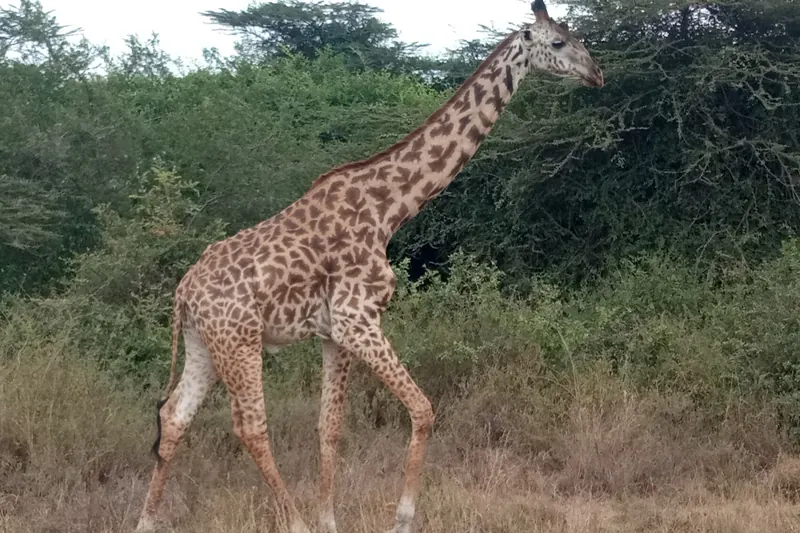
- Giraffe (Wildlife)
- The Maasai giraffe roams the park's plains. See giraffes.
- Giraffe Centre (Place)
- A centre in Lang'ata where you feed Rothschild's giraffes from a platform. It is outside the park. See Giraffe Centre entry.
H
- Hartebeest (Wildlife)
- A tall, red-brown antelope with a long face and bent horns, common on the plains.
- Hippo (Wildlife)
- The hippopotamus lives in the rivers. Hippo Pools is where to see them. See hippos.
- Hippo Pools (Place)
- A spot on the Athi and Mbagathi rivers with a short walk escorted by an armed KWS ranger. It is the one walk inside the park.
- Hooting (Safari term)
- Using the car horn. Hooting is banned in the park under the KWS rules.
- Hyena (Wildlife)
- The spotted hyena is recorded in the park. Mostly active at night and in the early morning.
I
- Impala (Wildlife)
- A medium-sized antelope; only males carry horns. Recorded across the park.
- Ivory Burning Site (Place)
- A monument just inside the Main Gate where Kenya burned ivory stocks, in 1989 and 2016. Visitors may step out here.
J
- jambo (Swahili)
- Swahili for "hello".
K
- karibu (Swahili)
- Swahili for "welcome". You hear it at every gate and lodge.
- kiboko (Swahili)
- Swahili for "hippopotamus".
- kifaru (Swahili)
- Swahili for "rhinoceros". The park has been nicknamed "Kifaru Ark" for its rhino sanctuary.
- Kingfisher pride (Wildlife)
- A lion pride named by KWS in the park.
- Kitengela (Place)
- The area south of the park, toward which the park is open. Wildlife moves between the two.
- Kopje (Safari term)
- A small rocky hill rising from the plain. A South African English word.
- KWS (KWS term)
- Kenya Wildlife Service, the government body that manages Nairobi National Park and sets its rules and fees.
- KWS Pay (KWS term)
- The KWS payment service on eCitizen, at kwspay.ecitizen.go.ke.
L
- Lang'ata Road (Place)
- The road where the Main Gate stands, about 8 km from Nairobi's city centre.
- Leopard (Wildlife)
- A shy spotted cat, one of the Big Five. Often missed; riverine woodland is the place to look. See leopards.
- Lion (Wildlife)
- The park's top predator. Morning is the best time to look. See lions.
M
- Main Gate (Place)
- The park's main entrance on Lang'ata Road, at KWS headquarters, with the Safari Walk and Orphanage beside it.
- mamba (Swahili)
- Swahili for "crocodile".
- Mbagathi River (Place)
- The river on the park's open southern side. Animals cross it to and from Kitengela.
- mbuni (Swahili)
- Swahili for "ostrich".
- Mokoyet pride (Wildlife)
- A lion pride named by KWS, linked to the Mokoyeti area of the park.
- Mokoyeti (Place)
- An area of riverine woodland in the park, a good place to look for leopards.
N
- Nagolomon Dam (Place)
- One of the park's dams, a regular stop for water birds and grazers.
- Nairobi Animal Orphanage (Place)
- A KWS facility by the Main Gate caring for injured and orphaned animals. Paid separately from the park.
- Nairobi Safari Walk (Place)
- A raised boardwalk by the Main Gate with animals in natural enclosures. See Safari Walk fees.
- ngiri (Swahili)
- Swahili for "warthog".
- Non-resident (KWS term)
- A foreign visitor who does not live in Kenya. Non-residents pay the highest park fee, in US dollars. See tickets.
- nyati (Swahili)
- Swahili for "buffalo".
- nyumbu (Swahili)
- Swahili for "wildebeest".
O
- Ostrich (Wildlife)
- The world's largest bird, common on the park's open plains.
P
- Picnic site (Place)
- A designated spot inside the park where you may get out of the vehicle. Fires only where allowed.
- polepole (Swahili)
- Swahili for "slowly" or "gently". A good motto for a game drive.
- Pop-up roof (Safari term)
- A roof that lifts on a safari vehicle so you can stand and look out. Our vans have them.
- Private tour (Safari term)
- A tour for your group only. Ours are priced per group, not per person. See private tour.
- punda milia (Swahili)
- Swahili for "zebra"; literally "striped donkey".
R
- Ranger (KWS term)
- A KWS officer who protects the park and its animals. Rangers have the final word on rules in the park.
- Resident (KWS term)
- A foreigner living in Kenya with valid residence papers. Residents pay a lower rate in shillings.
S
- safari (Swahili)
- A Swahili word meaning "journey". In English it now means a trip to watch wildlife.
- Sheldrick (Place)
- Short for the Sheldrick Wildlife Trust elephant nursery, the place to see elephants in Nairobi.
- simba (Swahili)
- Swahili for "lion".
- swala (Swahili)
- Swahili for "gazelle" or "antelope".
T
- tembo (Swahili)
- Swahili for "elephant". You will see them at Sheldrick, not wild in the park.
- tumbili (Swahili)
- Swahili for "monkey".
- twiga (Swahili)
- Swahili for "giraffe".
W
- Warthog (Wildlife)
- A wild pig with tusks, recorded across the park's grassland.
- Waterbuck (Wildlife)
- An antelope found near water, listed among the park's grazers.
- Wildebeest (Wildlife)
- Also called gnu. Herds once migrated in big numbers between the park and the Athi-Kapiti plains.
Z
- Zebra (Wildlife)
- The plains zebra, common and easy to see. See zebras.
Which Swahili words help on safari?
The most useful are jambo (hello), karibu (welcome), asante (thank you) and polepole (slowly). For animals, learn simba (lion), chui (leopard), nyati (buffalo), kifaru (rhino), twiga (giraffe) and punda milia (zebra). Your guide will be glad you tried, and it makes calling out sightings more fun.
Glossary FAQ
Quick answers about the safari words visitors ask about most: what safari means, which of the Big Five live in Nairobi National Park, how resident and non-resident fees differ, and what a pop-up roof is. Fuller details are in the glossary entries above and on the linked pages.
What does safari mean?
Safari is a Swahili word meaning journey. In English it means a trip to see wildlife, such as a game drive in Nairobi National Park.
What is the Big Five in Nairobi National Park?
The Big Five are lion, leopard, buffalo, rhino and elephant. Nairobi National Park has four of them. There are no wild elephants; see orphaned elephants at the Sheldrick nursery.
What is the difference between resident and non-resident rates?
Non-residents are foreign visitors and pay in US dollars. Residents live in Kenya with valid papers and pay a lower rate in shillings. Citizens pay the lowest rate. All rates are paid cashless.
What is a pop-up roof?
A roof on a safari vehicle that lifts up so passengers can stand and watch and photograph animals with a clear view.
See it for yourself
Hear these words in the field on a private game drive. We pick up at 05:00 to reach the gate at 06:00, price per group so your group travels alone, and you pay park fees to KWS separately. Half-day drives start at $300 per group.